If you’re hauling dirt, rock, and debris with a pickup or work truck, a bumper pull dump trailer is often the simplest way to get it done. It’s a hydraulic dump trailer that hitches to the back of your truck instead of to a ball in the bed, so it works with the trucks you already run. Choosing the right one depends on what you haul, how much it weighs, and what your truck can tow. Whether you’re a contractor clearing a site, a landscaper hauling mulch and stone, or a municipal crew cleaning up after a storm, the right bumper pull trailer can cut down on trips and keep work moving.
What Does “Bumper Pull” Mean on a Dump Trailer?
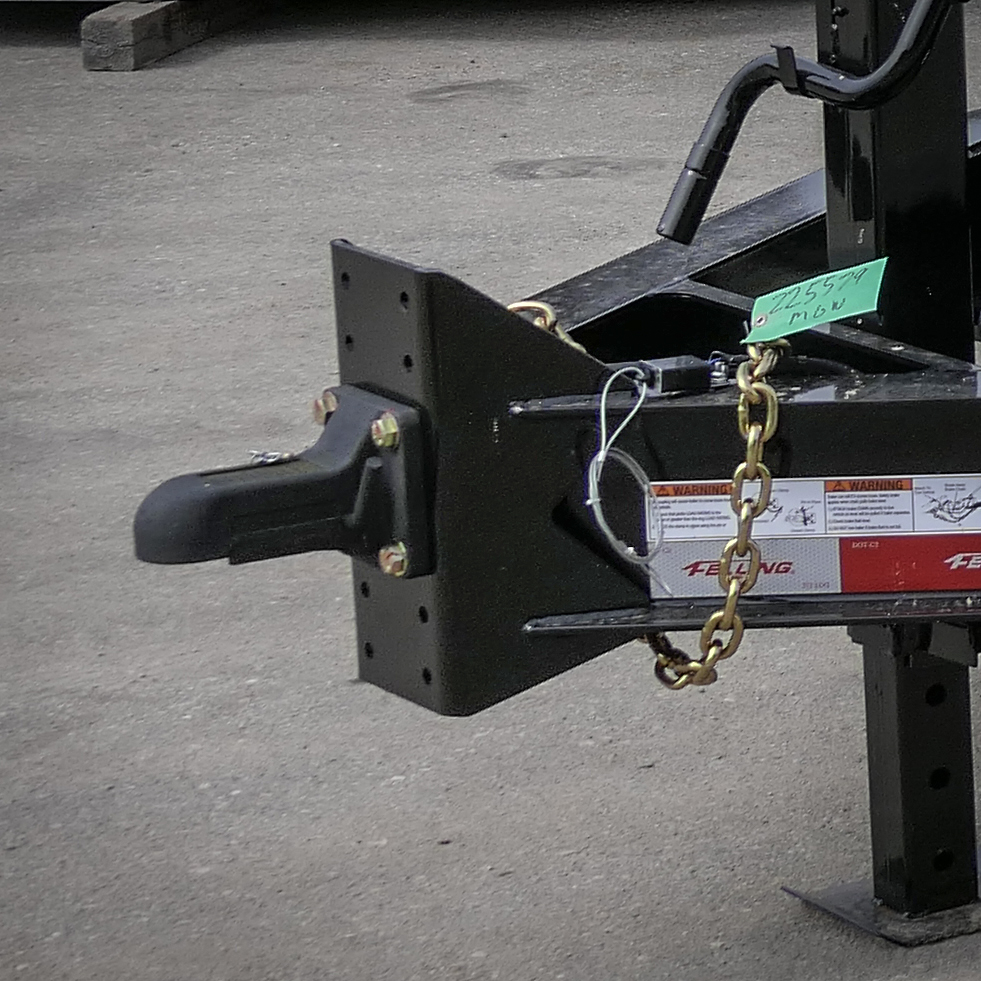
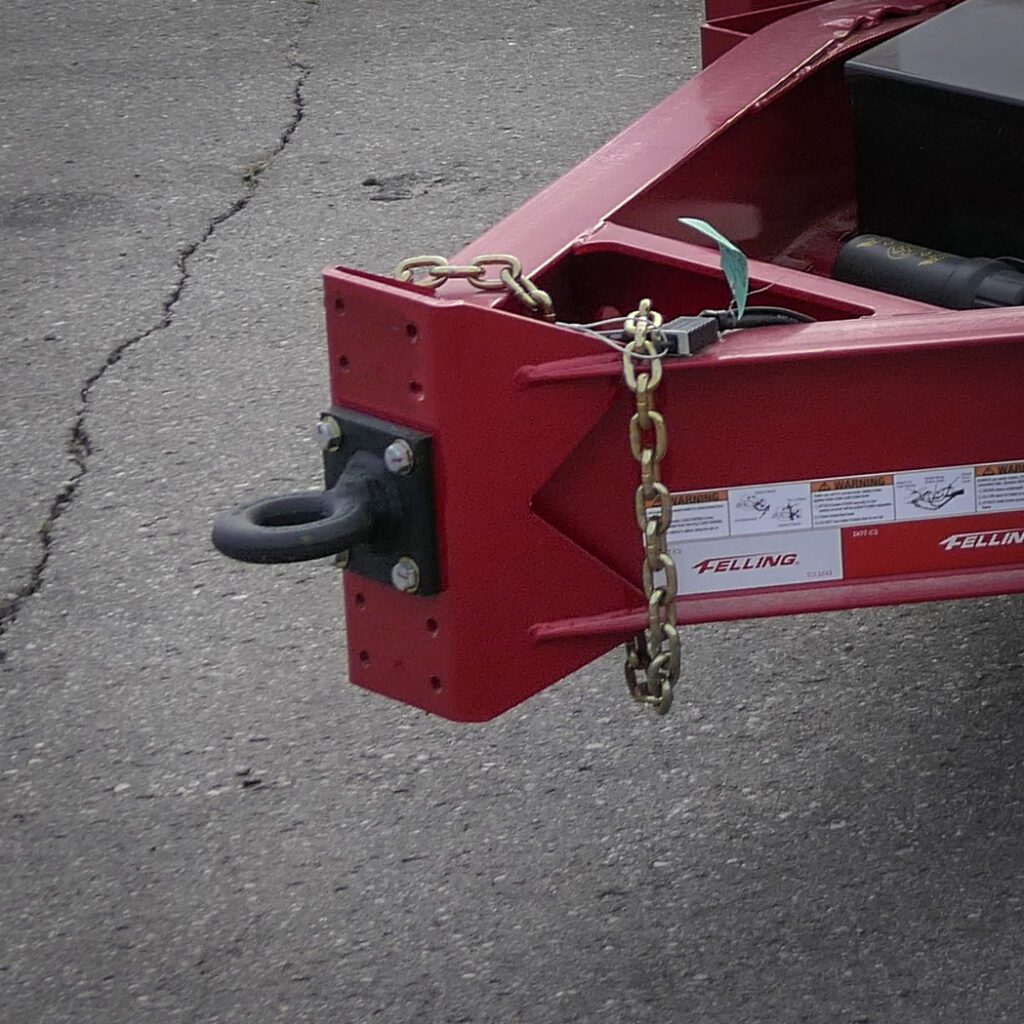
The name can be a little misleading. A bumper pull trailer, sometimes called a tag or tagalong trailer, doesn’t actually connect to the bumper. It couples to a hitch mounted on the tow vehicle’s frame, with the trailer tongue reaching forward to meet the truck. On a Felling dump trailer, that connection comes in one of two styles. The smaller models, including the FT-6 DT, FT-10 DT, and FT-12 DT HD, come standard with a 2-5/16″ adjustable ball coupler. The larger DT HD and deck-over models step up to a 2.5″ adjustable lunette eye/pintle hitch, rated for the heavier loads those trailers carry. Both are bumper pull setups. The hardware just changes as the payload grows.
Why Do So Many Crews Choose a Bumper Pull Dump Trailer?
Most crews don’t want to rebuild their fleet around a trailer. They want one that fits the trucks, jobsites, and budget they already have. That’s where a bumper pull dump trailer earns its spot. There’s no gooseneck ball to install, so it hooks up to the trucks you’re already running. The truck bed stays open for tools, fuel cans, and supplies. It also follows the tow vehicle with a normal turning radius, which matters more than most buyers expect on tight residential lots and city streets. Bumper pull trailers generally cost less than gooseneck models too, so more of your budget goes toward the size and options your work actually calls for.
Which Felling Dump Trailer Fits Your Work?
Three of Felling’s hydraulic dump trailer lines come standard as bumper pulls, and each one is built for a different kind of workload.
DT Series
The FT-6 DT and FT-10 DT are the compact end of the DT and DT HD series, with capacities from 4,500 to 7,000 lbs. The single-axle FT-6 DT has the slimmer footprint, while the tandem-axle FT-10 DT is a bit wider. Drop axles keep the deck low, around 21 to 24 inches. It’s a good fit for crews moving smaller loads of mulch, rock, and cleanup debris.
DT HD Series
When the loads get heavier, the DT HD steps in. The FT-12, FT-14, FT-16, and FT-20 DT HD carry 9,900 to 17,600 lbs and are built for dirt, sand, and rock, with a heavy-duty scissor hoist and 20″ sides with stake pockets. Every DT HD also comes with slide-out ramps stored under the box. That means you can bring a skid steer along to grade a site, then haul the debris out in the same trailer. Felling builds its dump trailers for material hauling and jobsite flexibility first, and the ramps are there to help one trailer do more on the job.
Deck-Over Dump
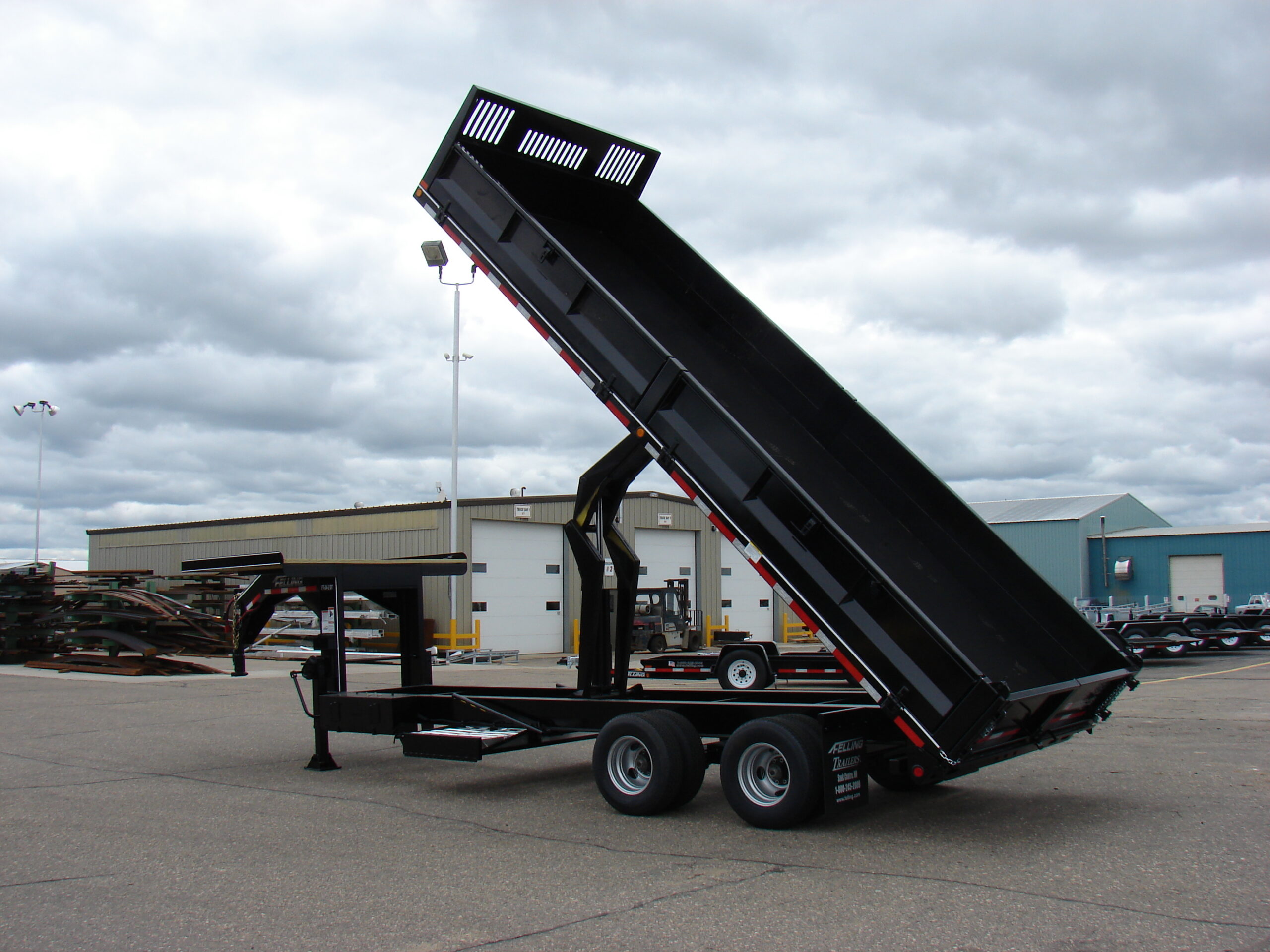
For the biggest loads, the deck-over dump trailers (FT-16-2, FT-20-2, and FT-24-2 DT) set the box above the wheels for a wider bed and capacities up to 20,200 lbs. You can choose a standard dump body, a contractor body with fold-down sides, or a construction body with tall fixed sides. Like the larger DT HD models, the deck-over dump comes standard as a bumper pull with a pintle hitch.
When Does a Gooseneck Make More Sense?
A bumper pull covers most dump trailer work, but it isn’t the only option. If you’re hauling at the top of the deck-over’s range with a pickup already set up for a gooseneck, Felling offers a gooseneck A-frame hitch on its deck-over dump trailers to transfer more weight to the truck and improve load stability. The tradeoff is that it takes up the truck bed and only works with a pickup. For a closer look at those differences, see this breakdown of gooseneck A-frame vs. bumper pull trailers.
How Do You Pick the Right Bumper Pull Dump Trailer?
The wrong trailer usually shows up one of two ways: extra trips because it’s too small, or a truck working harder than it should because the trailer is too big. A little planning up front avoids both.
Start with what you haul most often and how much it weighs, not just how much space it takes up. Next, compare the trailer’s GVWR with your truck’s towing capacity and hitch rating so the two are matched. Then talk it through with someone who builds them. A Felling trailer expert can help narrow down the size, body style, hitch, and options for the way your crew works, and the dealer locator makes it easy to find a Felling dealer nearby. The right bumper pull dump trailer lets your crew haul material in, move it around, and take it out with the truck already in your yard. When you’re ready to see what fits, request a quote and Felling will help you spec a trailer built for your work.
About Felling Trailers, Inc.
Felling Trailers is a family-owned and operated Full-Line Trailer Manufacturer located in Central Minnesota. Started in 1974, Felling Trailers, Inc. has grown from a small shop to a factory and office complex that today covers over 400,000 square feet. Felling’s pride and differentiation is its customized trailer division. Its engineers utilize the latest Industry-leading design techniques, and its experienced metal craftspeople use cutting-edge technology to turn its customers’ conceptual Trailer needs into tangible products. Felling has been providing innovative trailer solutions to the transportation industry for over 50 years. Felling Trailers’ current capabilities allow them to provide a high-quality product that is distributed across North America and internationally. Felling Trailers, Inc. is an ISO 9001 Quality Management System Certified company, a WBENC-Certified WBE company, and an Equal Opportunity Employer.
For more information, contact 1-800-245-2809, [email protected], or visit our website. You can also follow us on Facebook and Instagram.