The best scissor lift trailers are designed to safely transport lifts of varying sizes while providing the capacity, deck space, loading features, and durability needed for efficient jobsite transportation. Choosing the right trailer depends on the lift’s weight, dimensions, transport frequency, and loading requirements. Whether you’re a contractor moving equipment between projects, a rental company delivering lifts to customers, or a municipality transporting equipment for maintenance work, selecting the right trailer can improve efficiency, simplify loading, and help protect your investment.
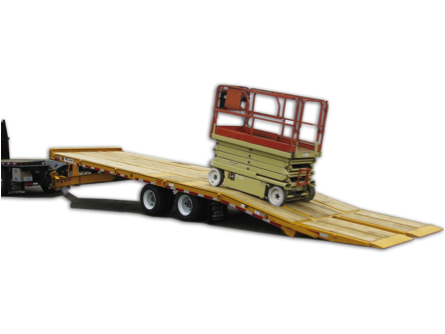
What Makes a Good Scissor Lift Trailer?
Scissor lifts are among the most commonly used pieces of equipment on construction sites, in facility maintenance, and throughout the rental industry. While they are designed to help crews work safely at elevated heights, transporting them requires a trailer capable of handling their size and weight. Not all scissor lift trailers are created equal. Several key features can make a significant difference in safety, performance, and ease of use.
Capacity Matters
One of the first considerations when selecting a scissor lift trailer is weight capacity. Scissor lifts vary considerably in operating weight. Smaller electric models may weigh just a few thousand pounds, while larger rough-terrain units can exceed 10,000 pounds. Before choosing a trailer, always verify the lift’s operating weight and ensure the trailer’s Gross Vehicle Weight Rating (GVWR) and payload capacity can safely accommodate the load. Selecting a trailer with adequate capacity not only supports safe transport but also provides flexibility should your equipment needs change in the future.
Deck Size and Usable Space
Trailer dimensions are just as important as capacity. The deck should provide enough room for proper equipment placement and securement without overcrowding the load. Operators should consider the overall length and width of the scissor lift, including any platform extensions or accessories that may affect transport dimensions. Adequate deck space also allows for proper weight distribution, which can improve towing performance and stability.
Durable Construction
Equipment trailers often operate in demanding environments. Construction sites, gravel roads, and changing weather conditions can all place stress on a trailer over time. A well-built scissor lift trailer should feature durable construction that withstands frequent loading, unloading, and transport. Quality components and heavy-duty construction help support long-term reliability while minimizing downtime.
Securement Options
Proper cargo securement is essential when hauling heavy equipment. Trailers equipped with multiple tie-down points provide greater flexibility when securing scissor lifts of different sizes. Properly securing equipment helps prevent movement during transport and supports safer operation on the road.
Why Loading Features Matter
Loading and unloading can have a significant impact on productivity, especially for businesses that transport scissor lifts regularly. For many equipment owners and operators, the time spent preparing equipment for transport is just as important as the transportation itself. Trailer features that simplify loading can help reduce downtime and improve efficiency throughout the workday.
Because scissor lifts are frequently moved between job sites, loading efficiency can quickly add up. A trailer that enables operators to load and unload equipment safely and efficiently can help reduce delays and keep projects on schedule. For rental companies and contractors who move scissor lifts daily, even small improvements in loading efficiency can save valuable time throughout the week.
Lower Loading Angles
Scissor lifts often have limited ground clearance, which can make loading more challenging. Trailer configurations that provide a lower loading angle can help create a smoother transition from the ground to the trailer deck. This can reduce the likelihood of equipment coming into contact with the trailer during loading and unloading.
Equipment Protection
A smoother loading experience can also help reduce unnecessary wear on equipment. Minimizing abrupt transitions during loading and unloading may help reduce stress on tires, undercarriage components, and other parts that undergo repeated use throughout the machine’s life.
Matching the Right Scissor Lift Trailer to the Job
Not every scissor lift is used in the same environment. The type of work being performed can influence the trailer features and capacity that make the most sense.
Electric Scissor Lifts
Electric scissor lifts are commonly used indoors for facility maintenance, warehousing, and commercial construction projects. While they are often lighter than rough-terrain models, operators should still select a trailer that provides adequate capacity and securement options.
Rough-Terrain Scissor Lifts
Rough-terrain scissor lifts are designed for outdoor jobsites and often feature larger dimensions and higher operating weights. These machines typically require heavier-duty trailers that can accommodate their size and weight requirements.
Rental Fleet Applications
Rental companies frequently transport scissor lifts between customers and jobsites. Efficient loading, reliable performance, and long-term durability are often top priorities when selecting trailers for rental fleet operations.
Municipal and Contractor Fleets
Municipal departments and contractors often transport a variety of equipment throughout the year. Choosing a versatile equipment trailer can provide flexibility for hauling scissor lifts as well as other equipment when needed.
Felling Trailer Options for Hauling Scissor Lifts
Scissor lifts come in a wide range of sizes and applications, which means there is no one-size-fits-all trailer solution. The right trailer depends on the equipment’s weight, dimensions, loading requirements, and how frequently it is transported.
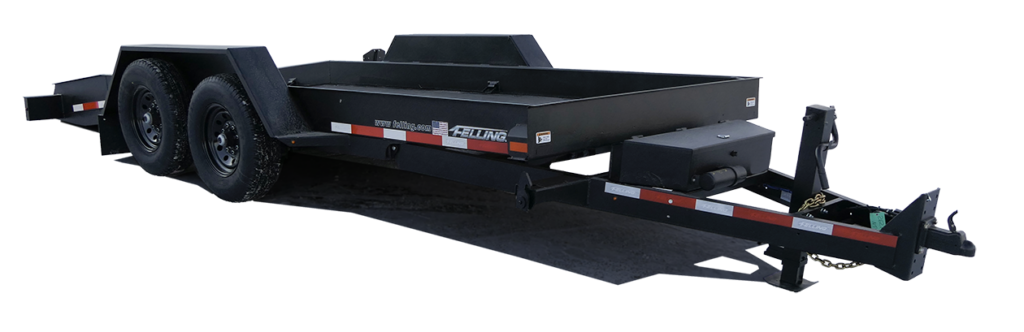
Drop Deck Tilt Trailers
For compact electric scissor lifts and other smaller equipment, Drop Deck Tilt trailers can be a practical option. With three different configurations, IT-I, Drop Deck Pan Tilt (DDPT), and the EZ-Tilt, these models have the right load angle to simplify loading and unloading of your haul compact equipment.
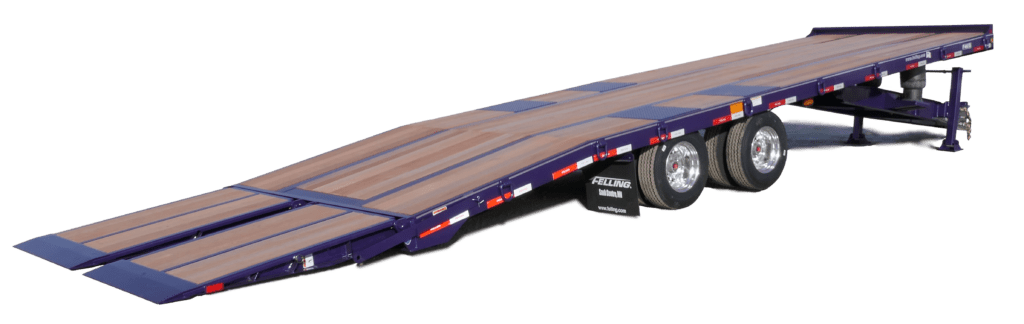
Air Tilt Deck Over Series
For operators transporting low-clearance equipment on a regular basis, the Air Tilt Trailers offer features that can improve loading efficiency. Felling’s Air Tilt Trailer utilizes air power from the tow vehicle to fill two airbags, which then raise the trailer smoothly; the airbags will then keep the deck in the tilted position to allow for loading/unloading of multiple pieces of equipment. With payload capacities of 20,000 lbs. – 50,000 lbs. makes it well-suited for transporting multiple pieces of equipment at a time, such as scissor lifts, pavers, and rollers.
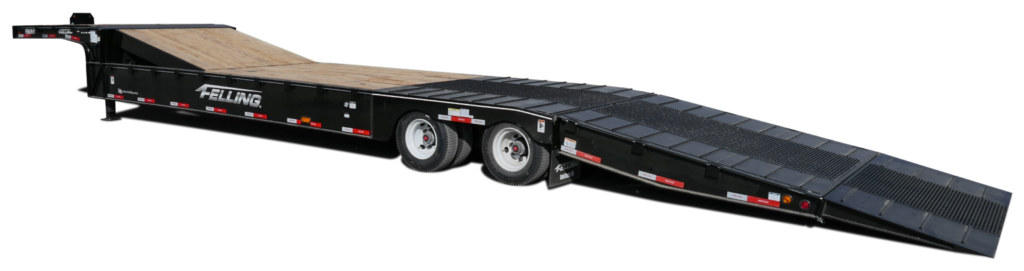
Hydraulic Tail Trailers
For heavier equipment applications, Hydraulic Tail Trailers, 35-50 ton capacities, offer another option to consider. These trailers are designed to simplify loading and unloading while providing the user with the flexibility to transport multiple pieces of small equipment or one to two large pieces. Felling’s hydraulic folding tail drop deck trailer design also provides the flexibility in the loading of low clearance machines like rollers, scissor lifts, and aerial lifts, with a six-degree (6º) break-over at the end of the main deck. When evaluating trailer options, it’s important to consider the specific scissor lift being transported and choose a trailer that provides the capacity, deck space, and loading features needed for the job.
Safe Transport Tips for Scissor Lifts
Selecting the right trailer is only part of safe equipment transportation. Before every trip, operators should inspect both the trailer and the equipment to help ensure everything is ready for the road.
Key areas to inspect include:
- Tires and tire pressure
- Trailer lights and wiring
- Couplers and safety chains
- Braking systems
- Tie-down equipment
- Load positioning and weight distribution
Following manufacturer recommendations and established equipment transport practices can help improve safety and reduce the likelihood of equipment damage during transport.
How to Choose the Right Scissor Lift Trailer
The best scissor lift trailers are designed to safely handle the equipment being transported while supporting efficient loading, unloading, and transport operations. When evaluating trailer options, focus on the factors that matter most: capacity, deck size, loading features, durability, and proper securement. Taking the time to match the trailer to the equipment and application can help improve productivity while protecting valuable assets. Whether you’re transporting a compact electric scissor lift or a larger rough-terrain model, selecting the right trailer can make a meaningful difference in safety, efficiency, and long-term performance.
About Felling Trailers, Inc.
Felling Trailers is a family-owned and operated Full-Line Trailer Manufacturer located in Central Minnesota. Started in 1974, Felling Trailers, Inc. has grown from a small shop to a factory and office complex that today covers over 400,000 square feet. Felling’s pride and differentiation is its customized trailer division. Its engineers utilize the latest Industry-leading design techniques, and its experienced metal craftspeople use cutting-edge technology to turn its customers’ conceptual Trailer needs into tangible products. Felling has been providing innovative trailer solutions to the transportation industry for over 50 years. Felling Trailers’ current capabilities allow them to provide a high-quality product that is distributed across North America and internationally. Felling Trailers, Inc. is an ISO 9001 Quality Management System Certified company, a WBENC-Certified WBE company, and an Equal Opportunity Employer.
For more information, contact 1-800-245-2809, [email protected], or visit our website. You can also follow us on Facebook and Instagram.